



|
Home
Mission and Focus
Steering Committee
Funded Projects
SPS Events
Program Links
Corporate Partners
Media
|
2008 Funded Projects
Project Themes:
Education, Seminars, & Planning
Bio & Renewables
Metrics & Measuring
Clean Water & Hygiene
Energy Savings, Storage & Emissions Reductions
Education, Seminars, & Planning
| |
|
|
 |
Sustainable Chemistry Seminar
|
| Marty Mulvihill |
Chemistry, Public Health |
| |
This new seminar series will focus on the chemical aspects of sustainable design.
These seminars will consider sustainable design from multiple perspectives.
The class will be divided into four units; the first will introduce concepts of basic molecular toxicology.
We will then consider current sustainable approaches to chemical production being used in the chemical industry.
Next, leading academics will discuss the future of sustainable design research in chemistry.
The course will conclude by considering the role that public policy can take in promoting more sustainable chemistry practices.
Course Control Number: 12449
Course website: http://www.greenchemistryandsustainabledesign.org/
|
| |
 |
Anticipatory and Preventive Toxicology Interdisciplinary Training Program
|
| Chris Vulpe |
Public Health, Civil & Environmental Engineering, Biology |
| |
This interdisciplinary graduate training program in "Anticipatory and Preventative Toxicology" that will have three interrelated goals towards training graduate students in new approaches for:
1) anticipating adverse effects of a chemical, 2) assessing chemical exposure, and 3) preventing human and ecosystem toxicity through public policy and regulatory initiatives.
The program will forge a link between the basic sciences and engineering and the social, regulatory, public policy, and business practice necessary to implement fundamental change in toxicity testing.
|
| |
 |
SPSP / Energy & Environmental Innovation Fellowships
|
| Drew Isaacs |
Business, Chemistry, Engineering, Natural Resources
|
| |
The Sustainable products & Solutions Program (SPSP) / Energy and Environmental Innovation (EEI) Fellowship Program will offer teams of graduate students at UC Berkeley the opportunity to pursue focused research in the fields of cleantech, sustainability, and renewable energy.
The program is modeled on the successful UNIDO Bridging the Divide Fellowship Program that ran 2003 - 2006. (Bridging the Divide fellowships have funded 90 graduate students, working in interdisciplinary teams of 3-4 on energy, clean water, environmental and other technologies in 17 countries in the developing world.)
The SPSP/EEI Fellowship Program will recruit teams of graduate students to develop and test technologies and business models for sustainability in real world business settings in the US and abroad, and create comprehensive analyses of the environmental, commercial and social impact as well as evaluate the prospects for sustainable adoption.
|
| |
 |
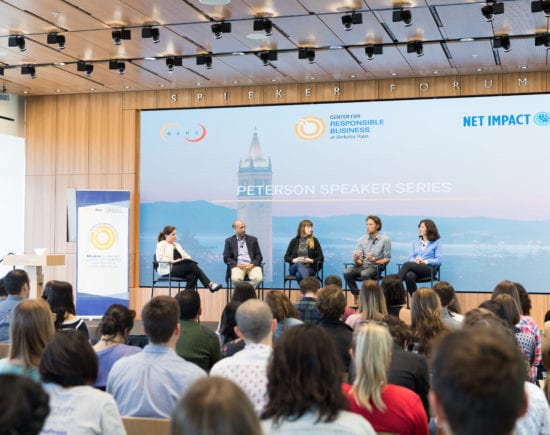
SPSP / Berkeley Net Impact Capitalism Next Speaker Series
|
| Megha Doshi |
Business, All Schools |
| |
UC Berkeley has the most top 10 graduate programs of any U.S. university and a strong curricular ethos around global social, environmental, and political problems.
However, interaction among graduate programs is limited. There is a tendency for each department to operate and innovate independently.
If we can create more opportunities for students, faculty, and industry experts to engage in intellectual discussion and debate, we can build a foundation at UC Berkeley for a multidisciplinary approach to addressing the world's social and environmental problems.
Thus this year long seminar series will explore emerging, cross-sectional sustainability solutions and address challenging social and environmental issues by attracting a large audience from multiple graduate (and undergraduate) programs to high profile seminars by:
1) Featuring well-known business leaders and industry experts.
2) Inviting UC Berkeley's most popular professors to serve as moderators and debate participants.
3) Emphasizing the role of discussion and debate rather than just lecture.
4) Establishing key contacts with point people at each UC Berkeley graduate school.
|
| |
Bio & Renewables
| |
|
|
 |
Building a host for production of alternative fuels
|
| Michelle Chang |
Chemistry, Business |
| |
This project seeks to assemble new and more efficient methods for the synthesizing bio-based alternative fuels or chemical feedstocks from plant biomass in a model host organism, such as Escherichia coli.
The initial focus is the production of molecules with better fuel properties than ethanol in terms of energy content, separation, and transport in a genetically-tractable host that can be used as a platform for engineering consolidated bioprocesses.
The initial studies will focus on developing a high-throughput synthetic pathway for production of 1-butanol.
Study of the butanol biosynthesis in E. coli will allow us to explore fundamental issues related to metabolic throughput in synthetic fermentation pathways and clarify how to efficiently divert cellular building blocks for biosynthesis of fuels and chemical feedstocks.
|
| |
 |
Evolution of Stable and Efficient Enzymes for Applications in Industrial Synthesis
|
| Matthew Francis |
Chemistry, Chemical Engineering, Business |
| |
A versatile diversity-based strategy is proposed for the generation of new enzymatic catalysts for sustainable chemical synthesis.
Starting with a lead sequence, large numbers of protein variants with altered catalytic activity will be generated on the tips of phage particles.
Chemical methods will be used to attach polymer chains to each phage, allowing them to be solubilized in aqueous or organic solvents.
The enzyme candidate on each phage particle will then be assessed for its ability to convert substrates at the ends of the polymer chains into desired products.
A chromatography step will be used to isolate the phage displaying the highest levels of conversion, and thus the phage possessing the most active enzymes on their surfaces.
This technique will represent one of the first and most general activity-based methods for the rapid evolution of new enzymatic reactions, and thus will have a transformative effect on the development of new processes that can proceed in environmentally benign media with little waste generation.
|
| |
 |
Biomass Powered Energy Harvester
|
| Erica Parra |
Mechnical Engineering, Chemistry, Biology |
| |
Worldwide energy demand is increasing and some predict that it will double in the next fifty years.
Therefore, energy conversion technology that is both renewable and environmentally safe is of great interest to our society.
The method that our research team is studying is the direct conversion of the chemical energy found in biomass into electrical energy through the use of microorganisms.
The mechanism of the device, known as a microbial fuel cell, is similar to that of a hydrogen fuel cell but offers the advantages of using inexpensive and self-renewable bacteria as the catalyst and liquid or solid simple sugars as the fuel.
Using microfabricated electro-mechanical systems that match the size of the bacterium, our effort focuses on the development of high resolution tools that will aid in the engineering and optimization of microbial fuel cells.
This interdisciplinary work is possible through collaboration between the Mechanical Engineering, Microbiology, and Chemistry departments at the University of California, Berkeley.
|
| |
Metrics & Measuring
| |
|
|
 |
Development of a Green Chemical Sensor for Trace Water Contaminants
|
| Marty Mulvihill |
Chemistry |
| |
This project will focus on developing a highly sensitive Surface Enhanced Raman Scattering (SERS) sensor for trace contaminants in groundwater, using the principles of sustainable design.
Access to clean water is an environmental and public health issue world-wide, which is predicted to increase in severity in the coming years.
To help evaluate and protect our water resources the development of a sensor which can screen multiple contaminants will be of fundamental interest.
In addition to the ecological benefit that this new technology promises, we will also take into account the resources and methods used to create this sensor.
|
| |
 |
Develop Comprehensive Life-Cycle Assessment Model for Pavements
|
| Arpad Horvath |
Civil & Environmental Engineering, Business |
| |
Each year, nearly $150 billion and 350 million tons of raw materials are invested into the United States highway infrastructure.
As these demands continue to grow, engineers face the increasingly difficult challenge of meeting the needs of traveling public while utilizing environmentally sustainable practices.
The objective of this project is to create a state-of-the-art software tool that evaluates the environmental and economic impacts of a road construction project.
The results produced by the tool, PaLATE, will include energy consumption, global warming potential, and a variety of air pollutants emission levels.
Each phase of the life cycle (materials production and extraction, construction, use, maintenance and rehabilitation, and end of life) will be evaluated, making this a comprehensive cradle-to-grave analysis tool.
PaLATE can be used by researchers, design companies, and transportation agencies to incorporate economic and environmental impacts into their project and policy level decision-making framework.
|
| |
 |
Sustainable Packaging: Metrics, Standards & Best Practices for Materials Processing and Utilization
|
| David Dornfeld |
Mechnical Engineering, Public Policy |
| |
This research program will focus on two basic areas of sustainable packaging: sustainable manufacturing (metrics, best practices, standards/performance measures), and manufacturing processes (resource reduction, material improvement/substitution) with a view towards the policy and standardization issues associated with the industry.
The research will be carried out at a macro level including a comprehensive review of existing methodologies and metrics for carbon footprint analysis (including comparison over several sectors: e.g. paper, oil, glass, metals) and determination of suitable metrics towards a workable measure of sustainable manufacturing and at a micro level which will develop standards for best practice and potential in the film and bag industry (and how to evaluate compliance), application of metrics to performance measurement, and materials and processing level impacts and effects.
We will be working with a coalition of manufacturers in the extruder and converter industry, and some of their customers.
This research will establish a basis for evaluating sustainable manufacturing of packaging and determine the inducements and barriers to the take-up of these practices within the relevant firms.
|
| |
Clean Water & Hygiene
| |
|
|
 |
Hand-Sanitizer: A Sustainable Hygiene Solution
|
| Alexis Rojas |
Public Health, Energy Resources Group (ERG), Business |
| |
The 'Hand-Sanitizer: A Sustainable Hygiene Solution' (SHS) project is a pilot program intended to develop a sustainable and scalable model for generating a sustainable market for hand-sanitizer in infrastructure poor rural communities where hand-hygiene compliance is low.
SHS will target over 1400 people living in rural communities of Baja California Sur (BCS), Mexico.
The project will be implemented over the course of eight months and will provide hand-sanitizer and hygiene education to 18 rural schools.
In parallel, it will provide trial samples of hand-sanitizer and social marketing messages to 360 households.
SHS will establish public and private partnerships necessary for the sustained provision of hand-sanitizer in rural schools and distribution in rural markets of participating communities.
A cost-efficient strategy for creating an demand within the target population will be identified by implementing and evaluating three distinct social-marketing campaigns.
The combination of a hand-sanitizer supply chain and a cost-effective marketing strategy will lead to a financially sustainable health intervention with the potential to be scaled-up to rural communities throughout northern Mexico.
The project will be implemented in conjunction with a non-profit organization based in La Paz, Mexico called Fundación Cántaro Azul.
|
| |
 |
Electrochemical Arsenic Remediation for Rural Bangladesh
|
| Susan Amrose |
Engineering, Energy Resources Group (ERG), Lawrence-Berkeley National Labs |
| |
Today, 30-80 million Bangladeshis are slowly being poisoned as they drink water from arsenic-contaminated wells.
This primarily rural population is too poor to afford arsenic remediation techniques that are cost effective only on large scales.
Low cost methods require frequent maintenance and diligent operation by each end user, leading to high abandonment rates, ineffective arsenic removal and low acceptability by the public.
Electrochemical Arsenic Remediation (ECAR) is a technique that can be used affordably, reliably, and on a small-community scale with little preexisting infrastructure, allowing for potential rapid dissemination into Bangladesh.
With support from the SPSP, the project team will develop a pilot community scale water center using ECAR to demonstrate clean water at an affordable price (~ US 2.5¢ per person per day) to a Bangladeshi village with full cost recovery.
Success will provide a financially and environmentally sustainable model for a small community micro-utility that is ready for operation and eventual replication and scale-up.
|
| |
 |
Household consumer products for low-cost drinking water treatment
|
| Kara Nelson |
Civil & Environmental Engineering, Industrial Engineering, Chemical Engineering |
| |
The goal of the Q-H2O project is to develop a new class of household consumer products for disinfecting water using surface-bound cationic antimicrobial compounds.
These compounds produce robust, permanent, antimicrobial coatings that can be applied to a variety of different surfaces.
Water is disinfected through contact with these surfaces.
Because the antimicrobial coating remains permanently bound to the surface, there is little maintenance required and no chemical alteration of the output water.
This technology has the potential to produce devices that are effective against a broad range of waterborne pathogens, very inexpensive to manufacture, and that can be optimized for ease-of-use and adoptability.
The project is a collaboration between UC Berkeley (Kara Nelson, Roya Maboudian, and George Shanthikumar) and the Aquaya Institute (Peter Kozodoy).
Q-H2O is also part of the Safe Water and Sanitation Initiative at the Blum Center for Developing Economies.
|
| |
 |
Arsenic Remediation of Bangladesh Drinking Water from a Public Health Perspective
|
| Will Babbitt |
Medicine (UCSF), Public Health, Energy Resources Group (ERG), Others |
| |
Arsenic in drinking water has been recognized as a public health emergency since its health effects were discovered in the 1980's.
Bangladesh is particularly affected, but mitigation studies have focused mainly on the supply aspects of interventional programs.
Few studies have examined community demand and feasibility.
This study will address socioeconomic, public health, cultural, and anthropological barriers to implementation of arsenic alleviation strategies through the use of a door-to-door survey and in-depth semi-structured interviews over the summer of 2008.
It will be part of a multidisciplinary study overseen by the Berkeley Arsenic Alleviation Group (BAAG).
In the short-term this will serve as a guideline for implementation of a pilot project for Dr. Ashok Gadgil's ARUBA (Arsenic Removal Using Bottom Ash) community-based arsenic removal plant.
In the long-term it may be used as a model for assessment of community readiness for arsenic-removal technologies and recognition of specific barriers at the community and individual levels.
Quantitative data analysis will focus on descriptive factors that may be used to predict particular behaviors or willingness to pay for certain technologies.
Qualitative data analysis will look at barriers to implementation and infrastructural possibilities within villages for overcoming these barriers.
|
| |
 |
UV Tube: Devel & Eval: Sustainable Safe Water Program for Resource Poor Communities
|
| Fermin Reygadas |
Business, Civil & Environmental Engineering, Public Health, Energy Resources Group (ERG) |
| |
Annually, 1.8 million people die from diarrheal disease, the vast majority of who are children under the age five living in the developing world.
A lack of safe, pathogen-free, drinking water is a major contributor to this disease burden.
To put this in perspective, it is estimated that 20% of the planet does not have access to an improved water source, and many more lack access to pathogen-free water.
While various treatment strategies have been developed that allow households in resource poor communities to disinfect their drinking water these technologies often impart the water with undesirable tastes and aromas, or require lengthy disinfection times.
The disinfection characteristics of these technologies often impede their sustained use within target households.
Through this project we aim to field test the UV Tube, a novel household water-disinfection technology developed by researchers at the University of California, Berkeley.
The UV Tube quickly and effectively inactivates waterborne pathogens with effecting the aroma, taste or temperature of the water.
In collaboration with Fundacion Cantaro Azul we will distribute and evaluate the UV Tube in 500 households in Baja California Sur, Mexico that currently lack access to affordable, pathogen-free sources of water.
The UV Tube project includes programmatic and health evaluation steps that will be critical to scaling the UV Tube into a regional safe water solution for Baja California Sur, and the expansion of the similar programs globally.
|
| |
 |
Toolkit for the 21st-Century Urban Sanitation Planner
|
| Ashley Murray |
Energy Resources Group (ERG), Engineering, Computer Science |
| |
With more than 2.6 billion people without access to improved sanitation, and with most cities in the developing world lacking adequate wastewater treatment, the world cannot afford to implement sanitation projects that fail.
Yet, the reality is that many sanitation schemes are in disrepair several months after commissioning.
Affordable, environmentally sustainable, and lasting sanitation solutions for emerging urban areas demands a shift away from schemes that have high economic costs, are energy and resource intensive, and are designed for the disposal of sewage and wastewater.
Appropriate sanitation solutions for unserved populations include schemes that are low-cost, produce rather than consume energy, and are designed for the reuse of treated sewage and wastewater.
To help facilitate the shift to this new sanitation paradigm, we are developing and piloting two tools that make up a toolkit for urban sanitation planners and stakeholders.
The first tool is a novel sustainability assessment (SA) for evaluating and monitoring existing sanitation infrastructure; the second is a five-step 'Design for Service' (DFS) planning and decision-making protocol for developing locally appropriate sewage treatment systems.
With the SA to provide the motivation for a new approach to sanitation, DFS is the first tool to facilitate an iterative process for transitioning to more sustainable, reuse-oriented sanitation schemes.
With a multidisciplinary team of Berkeley researchers, we are piloting our urban sanitation toolkit in collaboration with local partners in four cities in China and in Ghana.
|
| |
Energy Savings, Storage & Emissions Reductions
| |
|
|
 |
Metal-Organic Frameworks for Carbon Dioxide Capture
|
| Jeff Long |
Chemistry, Business, Chemical Engineering |
| |
The development of more efficient processes for carbon dioxide (CO2) capture from the flue streams of power plants is considered a key to the reduction of greenhouse gas emissions implicated in global warming.
This project will develop highly porous three-dimensional solids known as metal-organic frameworks as new CO2 capture materials.
The significant gas uptake and release abilities of these materials have already been demonstrated and are attributed to their porous structures which give rise to extraordinarily high surface areas.
The incorporation of appropriate amine functionalities-which can have a strong and selective affinity for CO2-into the three dimensional structures is expected to yield a new class of highly-efficient and cost-effective CO2 capture materials.
The integration of the new materials into industrial carbon capture and sequestration schemes offers an immense opportunity to reduce atmospheric emissions of greenhouse gases on a national and international scale.
|
| |
 |
Organometallic Frames for Sunlight Storage
|
| P. Vollhardt |
Chemistry, Physics |
| |
This project explores a series of structurally taylorable organometallic complexes that function as a light harvesting and energy storing entities.
It relies on the observation of a sun light driven isomerization to a higher thermal energy species, from which the stored energy can be released by a variety of mechanisms.
This approach is fundamentally different from traditional solutions: (i) Energy is stored in chemical bonds, as opposed to thermal storage, and thereby heat losses are eliminated;
(ii) The stored energy can be transported over long distances. This cannot be achieved if solar energy is converted directly to heat.
(iii) Temperature rise in a heat-driven device can be controlled through control of a chemical reaction rate.
|
| |
 |
Developing an Optimal Expander for Solar Thermal Combined Heat and Power
|
| Zack Norwood |
Engineering, Energy Resources Group (ERG) |
| |
Sustainable energy conversion is one of humankind's greatest challenges.
We are beginning to realize the myriad of health and environmental effects, the most dire being global warming, that result from the combustion of fossil fuels as human society's predominant source of energy.
As the political, economic, and environmental costs of fossil fuels rise, there is an urgent need for heating, cooling and electrical generation that is locally produced, cost-competitive, and nearly carbon neutral.
This research team aims to develop a new solar technology based on the principle of concentrating sunlight to produce heat.
The proposed Rankine cycle heat engine system will convert sunlight to heat at 60-80% solar thermal efficiency and electricity at 8-10% solar-electric efficiency, allowing adjustment of heat and electrical output on demand.
The following steps are proposed:
(1) Determine likely candidates for the electricity generator design for moderate temperature heat engine applications.
(2) Characterize the environmental impact (energy, toxicity, and global warming pollution) of each potential design, and provide an example of how to consider these impacts during the design stage.
(3) Optimize the system design using integrated multi-objective design-optimization over the following parameters: solar conversion efficiency, weight, cost, and environmental impacts.
(4) Produce a moderate temperature expander design and prototype and a viable business model.
In summary, this research is the development of a small heat engine able to operate efficiently in low concentration solar energy applications.
|
| |
 |
Climate and Health Cobenefits from Improved Cookstoves in China
|
| Kirk Smith |
Public Health, Business |
| |
The campus units of Environmental Health Sciences, Environmental Science, Policy and Management, and Haas School of Business are collaborating to address critical barriers to the widespread adoption of improved household cookstoves in impoverished regions of western China.
The SPS Award is helping to move our existing China stove project, funded by the USEPA and Wuppertal Institute, from a pilot phase to a sustainable and replicable business model that utilizes the international carbon financing to promote high-performing cost-effective stoves that have been developed by Chinese entrepreneurs and tested by our team during a 2006-7 national stove competition in China.
We are delivering high-quality carbon offsets to the voluntary carbon market by utilizing both a recently accepted Gold Standard Methodology for valuing carbon offsets from improved cookstoves designed in collaboration with our team here at UCB, and new monitoring technologies currently being developed by our research group.
These techniques are enabling us to conduct rigorous field experiments, surveys, and market analyses to demonstrate quantifiable health, environmental, economic, and social "co-benefits" from large-scale dissemination of improved cookstoves in China, focusing first on coal, which is widely used in rural areas.
This work will also help guide the development of future carbon market standards towards valuing rural energy development opportunities with the most cost-effective and attractive co-benefits.
|
| |
 |
Improved Stoves for Health and Environmental Sustainability
|
| David Levine |
Business, Energy, Resources Group (ERG), IEOR |
| |
Smoky and inefficient cook stoves cause over a million premature deaths a year and contribute to global warming.
This project, in partnership with the NGOs SHE and TOSTAN, evaluates the capability of solar ovens to lessen these problems in rural Senegal.
We are using a randomized controlled trial of the order in which women receive a solar oven among women who want to buy one.
Our results should help determine whether solar ovens should be eligible for credits for reductions in greenhouse gasses - an important potential boost to the distribution of improved stoves.
|
| |
 |
Reducing Rape and Starvation in Darfur: Berkeley Darfur Stove
|
| J. Simjanovic |
Energy & Resources Group (ERG), Public Policy, Engineering |
| |
To help alleviate the poverty, lack of natural resources, physical hardship, and the lack of physical security and dignity for the internally displaced peoples (IDPs) in Darfur, we have designed a high performance, fuel-efficient stove.
This stove is customized for the cooking methods and cuisine of Darfur residents.
An early model was successfully demonstrated in Darfur in 2005, and this has resulted in the adoption of approximately 3,000 units by the IDP population by Spring 2008.
The production of the stove costs approximately $20 when manufactured in Darfur.
During its lifetime of five years, it will result in net economic benefits for refugee families of approximately $250 per year.
At full production, a factory and assembly workshop capacity will build 25,000 stoves per year.
We estimate that one year's production will result in economic benefits worth $30 million over a five-year period.
With the support from the Sustainable Products and Solutions (SPS) Award, the two-year goals of this project are:
1) Help setting up a complete supply chain for production and dissemination of the stoves;
2) Explore financing options through carbon markets, philanthropic donors, and consumer lending to offset the cost of the stoves.
|
| |
 |
Low-Cost Solar Power Charge Controller
|
| Sonesh Surana |
Energy Resources Group (ERG), Mechnical Engineering, Computer Science |
| |
Through this project, we intend to development of a low-cost solar power charge controller to enable decentralized small-scale rural power generation of about 120 watts per setup, typically enough to power small households, primary healthcare outposts, schools, and development or government outposts in rural areas in developing countries.
The absence or shortage of ICT-quality power is a serious impediment to all technology-based rural development projects attempting to achieve sustainable operation in the fields of healthcare, education, e-governance and finance.
In areas off the grid, there is a major need for small-scale decentralized local sources of power.
Even in areas with access to grid electricity, the quality of power is so bad that low power farming equipment, refrigerators, medical devices, and computers are frequently damaged.
|
| |
|